
Hyperstate AI
Broke up the GPU monolith. Lower latency, lower bill, deploys that don't need a war room.
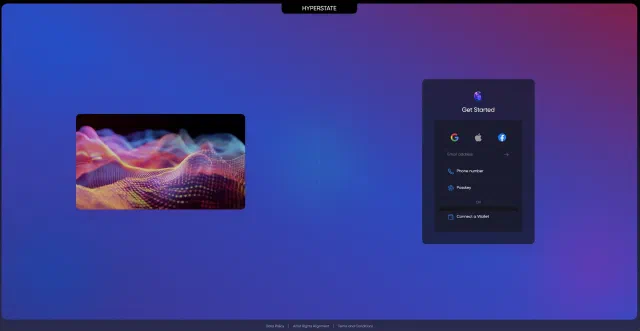
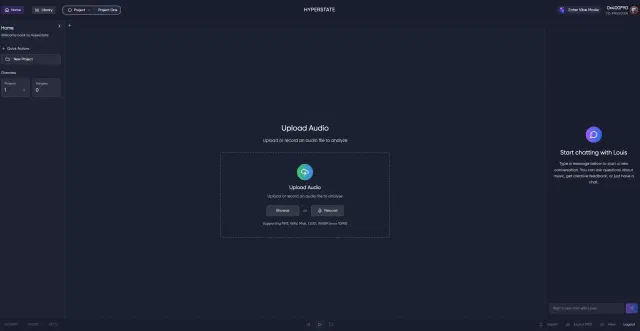
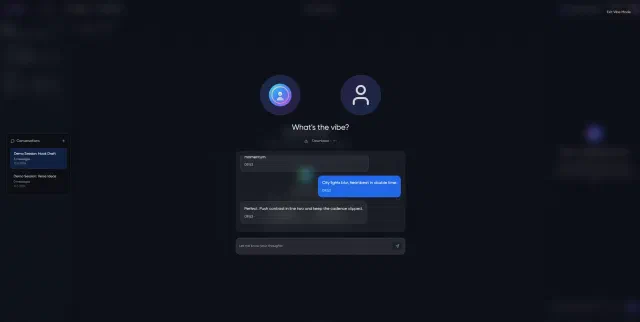
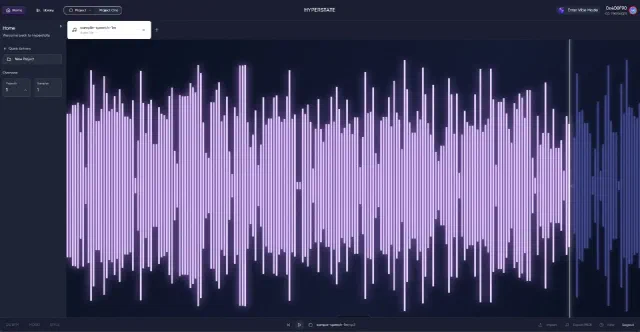
Hyperstate AI ran an AI-assisted music production platform. Creators uploaded audio and worked with a producer-style assistant (the Louis Bell persona) that kept full context across sessions. The startup ran out of funding after launch.
“They were on time, attentive, and easy to work with.” Jonathan Rowden ClutchOverview
Hyperstate AI ran an AI-assisted music production platform. Creators uploaded audio and worked with a producer-style assistant (the Louis Bell persona) that kept full context across sessions. The startup ran out of funding after launch.
What's the challenge?
A single GPU-heavy server handled audio processing, lyrics, transcription, MIDI generation, and the producer agent. Deploys were manual. Compute cost scaled with the box rather than with usage, and the architecture had been built for a demo rather than for launch traffic. Scaling it out meant separating the workloads first.
One server doing everything wasn't going to survive launch.
Audio processing, lyrics, transcription, generation, all stacked on a single GPU box, deployed by hand. It carried the demo and folded under real load. We split it into focused services with clean responsibility boundaries, dockerised every component, and swapped the heaviest in-house libraries for lightweight, scalable hosted alternatives. Same product surface, fraction of the compute bill, deploys nobody has to babysit.
What We Did
Drove the transition of GPU-heavy integrations out of the monolithic single-server setup into a distributed, microservice-oriented backend with clearly separated responsibilities (agents, audio processing, and generation services), each with its own scaling envelope. Drove the modernisation of the deployment stack from manual deploys to a dockerised, orchestrated infrastructure across every component. Drove the migration from local, self-managed, compute-heavy audio, lyrics, and transcription libraries to lightweight, scalable alternatives, cutting latency and the compute bill at the same time. On top of that: Django REST API, authentication, project and sample management, MIDI generation workflows, Neo4j knowledge graph, PostgreSQL. Same product surface, infrastructure that carries growth instead of fighting it.
Outcomes
Client Voice
They were on time, attentive, and easy to work with.
What We Learned
Heavy ML work doesn’t belong in your web request path. The moment audio, lyrics, and transcription each pull a model into the same box, every load spike takes the whole product down with it. The win is boring infrastructure: separate services for separate compute profiles, orchestrated deploys, hosted alternatives for the libraries you have no business owning.
Questions about this project
What is Hyperstate AI?
Hyperstate AI ran an AI-assisted music production platform. Creators uploaded audio and worked with a producer-style assistant (the Louis Bell persona) that kept full context across sessions. The startup ran out of funding after launch.
What was the challenge in the Hyperstate AI project?
A single GPU-heavy server handled audio processing, lyrics, transcription, MIDI generation, and the producer agent. Deploys were manual. Compute cost scaled with the box rather than with usage, and the architecture had been built for a demo rather than for launch traffic. Scaling it out meant separating the workloads first.
What did Wavect do for Hyperstate AI?
Drove the transition of GPU-heavy integrations out of the monolithic single-server setup into a distributed, microservice-oriented backend with clearly separated responsibilities (agents, audio processing, and generation services), each with its own scaling envelope. Drove the modernisation of the deployment stack from manual deploys to a dockerised, orchestrated infrastructure across every component. Drove the migration from local, self-managed, compute-heavy audio, lyrics, and transcription libraries to lightweight, scalable alternatives, cutting latency and the compute bill at the same time. On top of that: Django REST API, authentication, project and sample management, MIDI generation workflows, Neo4j knowledge graph, PostgreSQL. Same product surface, infrastructure that carries growth instead of fighting it.
What were the outcomes of the Hyperstate AI project?
- GPU Monolith, → Microservices
- Latency & Cost, Both Down
How did Wavect work with Hyperstate AI?
Engagement: Fullstack Build. Engagement size: Extended retainer. Year: 2025.
Which tech stack did Wavect use for Hyperstate AI?
Python / Django, OpenAI API, Neo4j, PostgreSQL, Docker.
What did Wavect learn from the Hyperstate AI project?
Heavy ML work doesn’t belong in your web request path. The moment audio, lyrics, and transcription each pull a model into the same box, every load spike takes the whole product down with it. The win is boring infrastructure: separate services for separate compute profiles, orchestrated deploys, hosted alternatives for the libraries you have no business owning.
Want outcomes like this?
Tell us what you're building. We'll tell you whether we're the right team for it.
Get in touch